SCADbloom
SCADbloom: Redesigning the "Ick Factor" of urban composting. A circular service-product ecosystem bridging the gap between individual intent and institutional climate action. This project explores how we can move from a linear "Take-Make-Waste" model toward a regenerative, decentralized waste infrastructure for high-density urban institutions.

Today, most waste systems operate in a linear economy model -Resources are extracted, transformed into products, and ultimately discarded. One of the most critical consequences of this model is what happens in landfills.
Landfills are a major environmental issue. They produce around 10% of global human-caused methane emissions, a greenhouse gas far more potent than carbon dioxide. In the United States, food waste is the largest material component in landfills.
It contributes to approximately 58% of fugitive methane emissions from municipal solid waste landfills. Yet food waste is also one of the most recoverable resources through composting. The barriers aren't just logistical—they are sensory. The "Ick Factor" of smell, mess, and sanitization creates a convenience gap that traps organic matter in landfills, fueling potent methane (CH4) emissions.
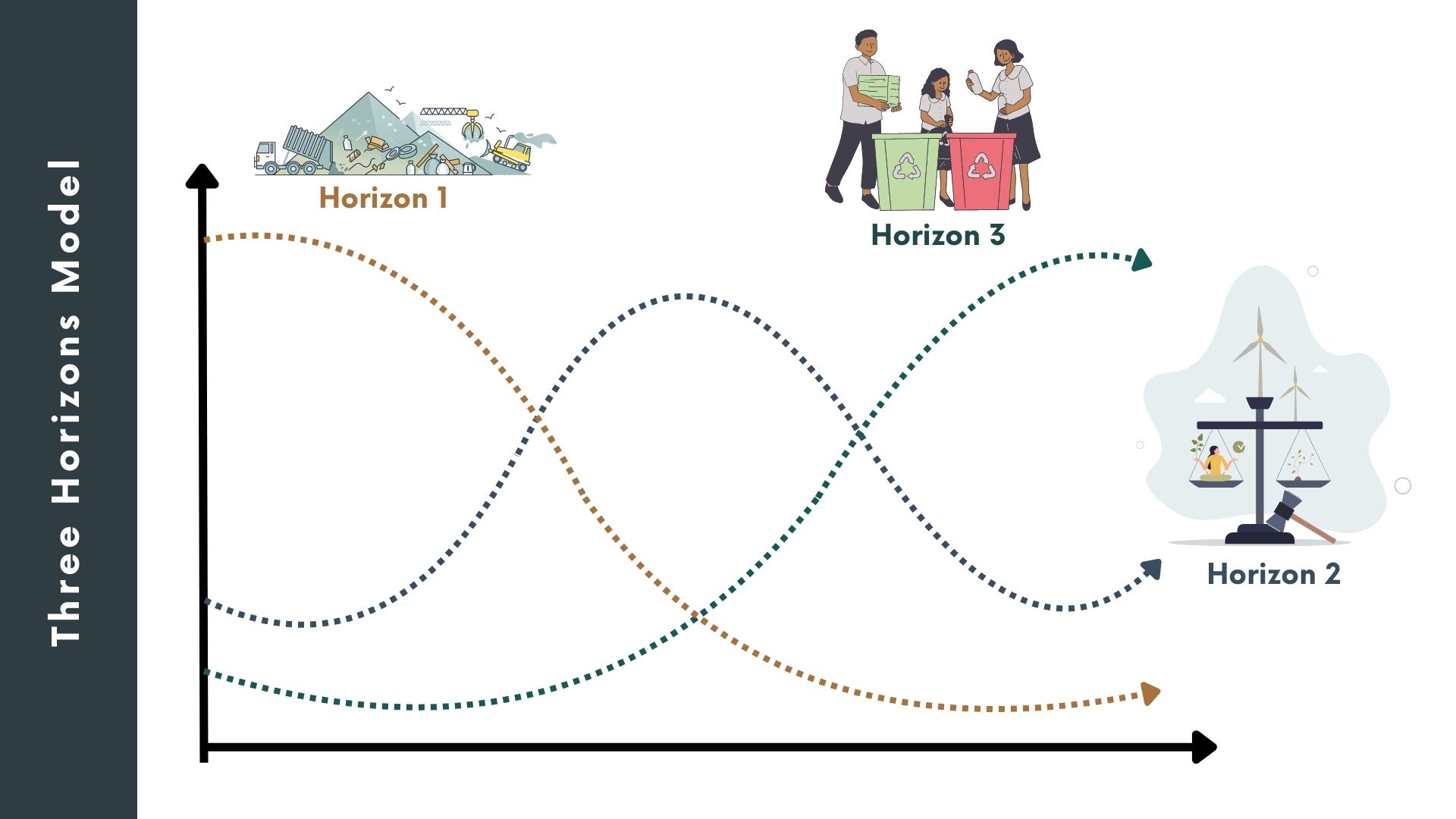
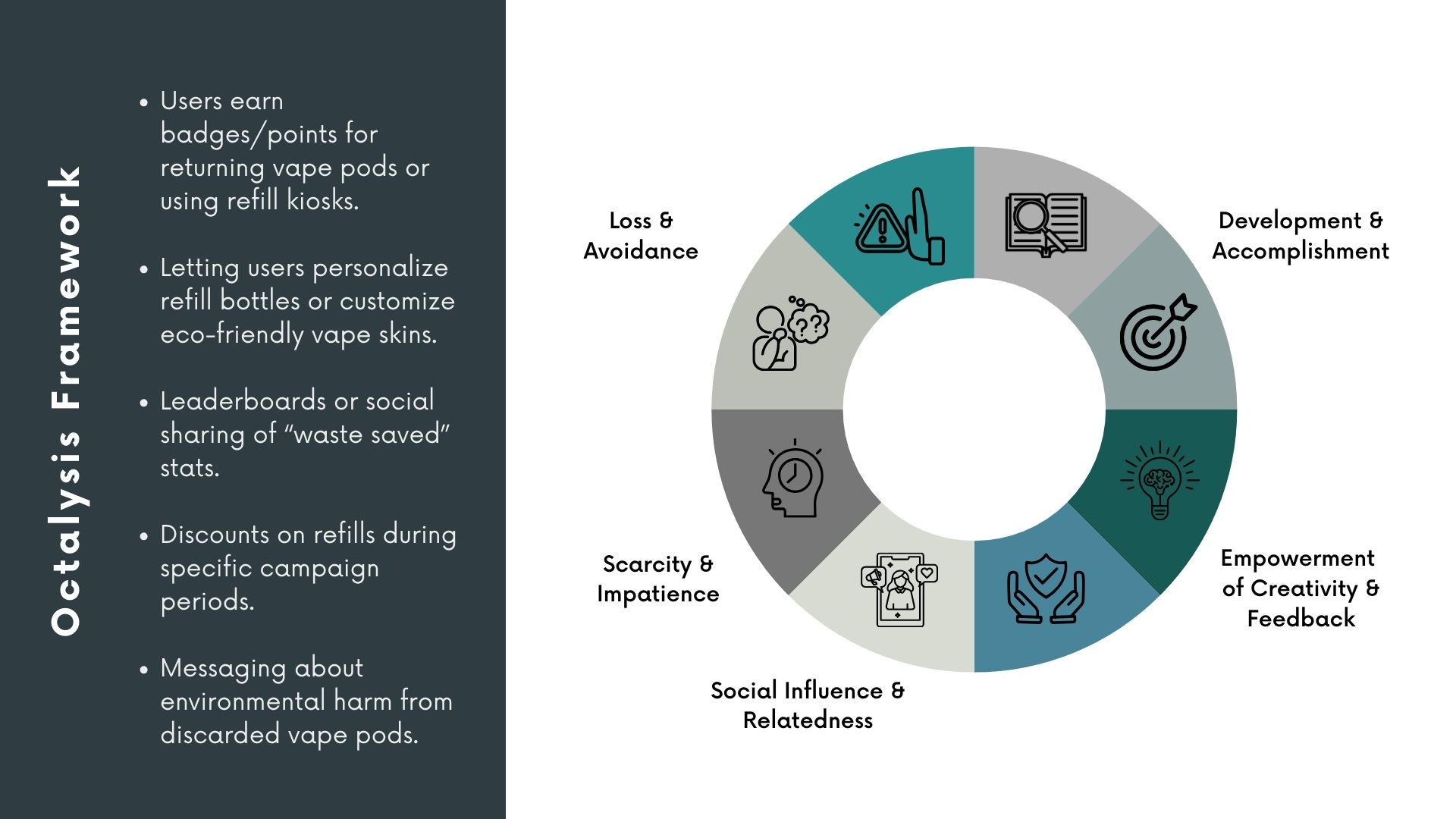
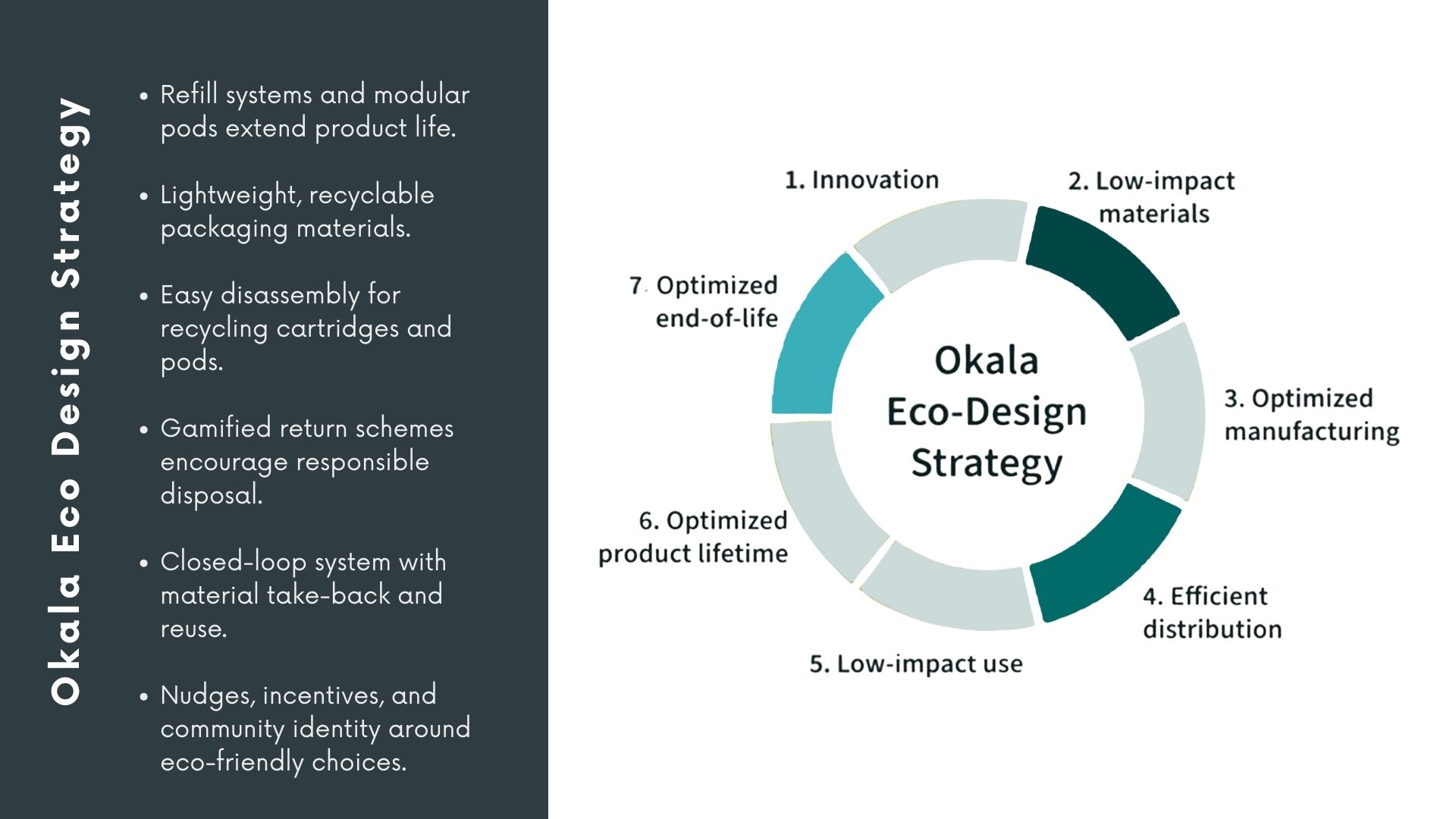
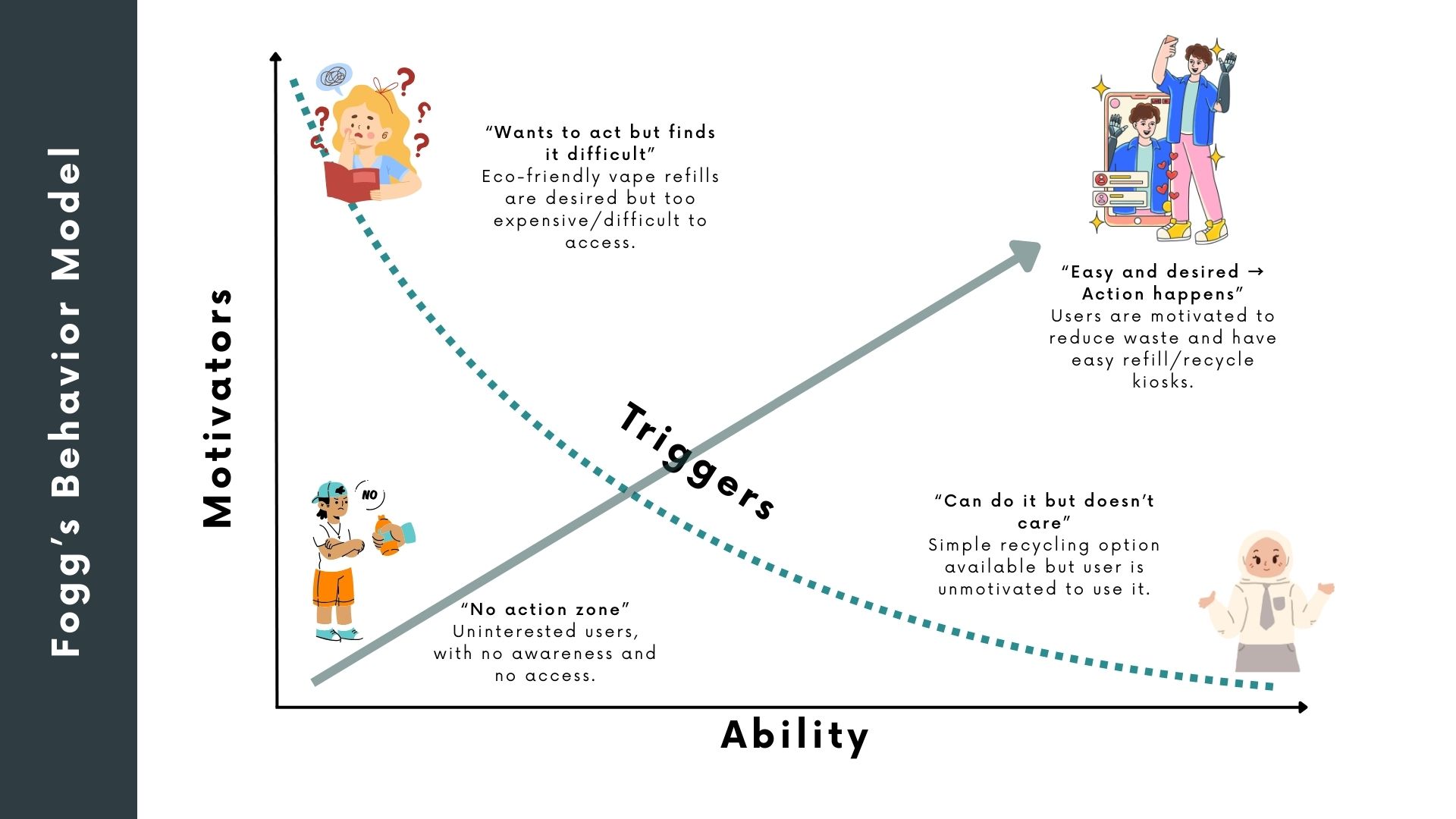
The project employs a multi-disciplinary framework that integrates strategic foresight with behavioral science to address the complexities of the waste crisis. The Three Horizons Model is utilized to map the transition from current waste-heavy practices toward a future-state circular economy, while the Okala Eco-Design Strategy informs the development of modular hardware and closed-loop material systems. To drive tangible user engagement, Fogg’s Behavior Model is applied to identify optimal triggers for sustainable action, complemented by the Octalysis Framework to design gamified incentives—such as badges and leaderboards—that transform responsible disposal into a habitual social norm.